Reading length: 2492 words / Archival PDF download
i. Introduction
As the white smoke cleared from the Sistine Chapel’s chimney, and Dominique Mamberti had declared Habemus Papam, the revelation of Pope Leo XIV’s election, formerly Cardinal Robert Francis Prevost, arrived at, for many Catholics, a time of great uncertainty for the Church in our age of Weberian ‘disenchantment.’ Perhaps for many Catholics, notably in the Global North, the election of Pope Leo XIV is not a classical triumphant return to certainty, but instead a continuation of the Church’s long-since-needed navigation through the ambiguities of late modernity. That the conclave elected an American prelate, the first in history, I greatly feel there has only been a deepening of the rupture from traditional loci of ecclesial authority.

The Church is, once more, at a theological and cultural impasse that calls for doctrinal retrenchment and reform—in a moment that is almost kairotic. It was widely expected from me that the 267th pontiff would align decisively with either radical pole, to either be (in the Catholic standard of saying) a return to dogmatic traditionalism or an embrace of progressive theology; instead, the election of a candidate who is, by many measures, moderate, and only appointed as cardinal by the late Francis in 2023, perhaps presents to me a prospect of progress through mediation as opposed to confrontation. And further, maybe such a decision is a signal from the College of a refusal to affirm the binary logic that has recently come to dominate intra-Church discourse, especially with the rise of reactionary politics in the West. And yet, with the most controversial belief of Pope Leo XIV as of right now being his support of a synodal church—which is, by far, an extremely non-provocative perspective—many ecclesial conservatives and reformists have tended to view the Pope’s moderation as an utter failure of nerve. That in a world driven by discrimination and genocide, and the exclusion of many homosexual peoples from Catholic spaces being supported, some Christians are disappointed in the choice of pontiff from this year’s conclave. Especially since he would not even dare to speak on Fiducia Supplicans.
Although I, like many, had been hoping for a more explicitly reformist choice, such as Cardinal Zuppi—whose pastoral vision and advocacy for social justice have earned him admiration across secular and religious lines—I am not so quick to dismiss Pope Leo XIV, even as a non-Catholic Christian. I have found in recent times that great disappointment on misgivings is capable of too easily calcifying into cynicism, and such into despair; but the Catholic imagination, if it is to truly remain universal, capacious, and open to the movement of Grace, must leave room for the unexpected ways in which the Spirit may act. Even in apparent moderation. And indeed, to expect revolution may be to entirely misunderstand the nature of Catholic reform. The Church cannot renew itself through abrupt disjunctions, as it is simply far too old. Rather, its deepest and most transformative moments of change emerge from the center of fidelity. Therefore, Pope Leo XIV’s election may offer a somewhat paradoxical hope: that change can occur not despite tradition, but through it; not through the abandonment of the structures of the Church, but by inhabiting them differently.
This is not a defense of Leo XIV as the ideal pope. Nor is it a projection of my individual reformist and agapeic aspirations onto a figure that has, thus far, remained largely opaque! Instead, it is a meditation on the possibilities that may yet reside within Pope Leo XIV’s moderation. I wish to think of the pope’s election, for my reflection in the future on initial impressions will prove entertaining to me and suggest that perhaps what appears as centrism may instead be an opening for inclusion, synodality, and a revitalized ecclesiology that is fine-tuned for the crises of our modern era. So, understand this as a meditation.
For this is a Christian concern, I will turn first to Scripture, in search of a theological ‘allowance’ for such an approach, then I will turn to a philosophical reflection on progressivity within the Church by referencing the thoughts of François Laruelle and his notion of non-philosophy and Christo-fiction as theological frameworks for repackaging the transformation of the Church.
ii. On Pope Leo XIV, and Why Progressive?
I will not bother with explaining too far into detail on the career and biographical information on Pope Leo XIV, for such information can be found elsewhere. I will only summarize that he is an Augustinian missionary, Prior General from 2001 to 2003, with extensive pastoral experience in Peru. He is neither a celebrity cardinal nor career curialist, making him not as prominent a figure in pre-conclave speculations as ones such as Cardinals Tagle and Sarah. Theologically, the Pope has not yet courted controversy. His reputation (as supported by some of his Sisters) is of pastoral attentiveness, institutional competence, a pro-migrant, anti-Trump & Vance outlook, and a disposition toward dialogue over declaration. He has a very unassuming profile.
Yet in such restraint there is some substance to be found. Leo XIV’s episcopal career has been a consistent demonstration of his concern for the realities of the Church’s peripheries. He has concern for indigenous communities of Latin America, and is incredibly supportive of many of Francis’ doctrines, especially synodality. He will likely never be a revolutionary in the absence of a Francis or a John XXIII. But nor is he a reactionary figure that is yearning for a lost Christendom that has absolutely no place within the modern world.
Leo XIV is maybe the only kind of progressive the Church can presently sustain, following Francis. In a global communion fraught with theological dissonance (between a perceived European Catholicism in retreat, an African Church often socially conservative, and a Latin American base shaped by liberationist sensibilities) a progressive pope truly is incapable of affording the high cost of “being polarizing.” His moderation read as a phronesis may serve as what the Gospel names “a yeast in the dough” (Mt 13:33). A sort-of quiet ferment that does not entirely shatter the structure but transforms it from within.
33 He told them another parable: “The kingdom of heaven is like yeast that a woman took and mixed in with three measures of flour until all of it was leavened.” — Matthew 13:33 (NRSVUE)
But it should not be said that such a position is without risk. In the current age where LGBT persons are often excluded from Catholic life, and where women remain structurally marginalized, and where the ecological crisis demands moral attention, I had hoped for a pontiff who would speak almost prophetically and legislate with an extreme boldness. But change in the Church—if it is ever to be lasting, like Vatican II—must be done slowly. A ‘progressive’ pope who is pastorally moderate may be uniquely placed amongst this delicate image. The Church needs a progressive pope because it faces an urgent moral and social conflict that absolutely cannot be ignored, such as LGBT inclusion, the role of women, sexual abuse, and the ecological crisis… to name some few things. These are not just “political” or social concerns, but theological ones; to say that matters of human dignity and justice are not theological or in relevance to Christianity is a complete heresy and disregard for the stewardship of Creation, one of the defining commandments of our very faith. A progressive pope must and can address such issues in a way that does not upheave traditions to upset the sensitive traditionalists but also does not cause unnecessary exclusion and division. And whilst perhaps not progressive to the external world, Pope Leo XIV’s status as a moderate is, truthfully, more progressive than I had realistically expected in consideration of the world’s clime. I feel that his very moderacy will allow for the Church to become a more inclusive and relevant place of worship through a gradual and sustainable change that will respect the universality of the Church. This is why “progressive” is not a mere preference of individuals, but an inherent necessity for the Church if it wishes to remain operating and representative of God’s true agape in modern times.
iii. Scriptural Teachings on “Progressivism”
I will say once more that since this is a Christian matter, doctrinal support for a Christian audience is necessary. A progressive vision within the Church is not just an unsubstantiated product of modernity, as many critics woe to suggest, but instead an undeniable central message within the Gospel. Even from a Christological perspective, Jesus Christ was a revolutionary that rose up against the pagan empire of the Romans and was thus a “progressive” within his own time. Further, Christ’s ministry was an outreach to the marginalized and an effort of radical inclusion that defied the religious and societal norms of the Lord’s age. In Luke 4:18-19, Christ proclaims that: “The Spirit of the Lord is on me, because he has anointed me to bring good news to the poor… to set free those who are oppressed.” Such a mission is one that aligns deeply with the Catholic Church’s call to social justice today, as it should be, seeing as its foundations are entirely Christological. In Matthew 25:35-40, the famous Parable, Christ identifies himself with the marginalized in his saying that: “For I was hungry and you gave me food, I was thirsty and you gave me something to drink, I was a stranger and you welcomed me.” True discipleship is in the measure of compassionate action toward those in need even in a state of ignorance towards God; further, even in such a state is compassion favorable to doctrinal purity!
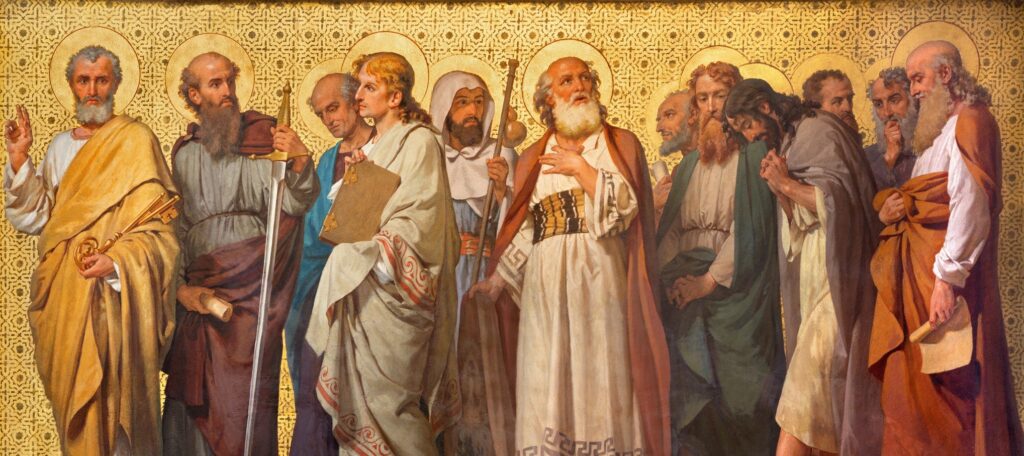
In Galatians 3:28, Paul’s proclamation—one of the most vocal Apostles—provides further Church guidance for progressive thought: “There is no longer Jew or Greek; there is no longer slave or free; there is no longer male and female, for all of you are one in Christ Jesus.” Such a declaration of radical equality is a direct challenge to any notion in the modern era that certain groups are outside of God’s grace and, by extension, the Church’s care. This was clearly addressed by the late Pope Francis in his support of informal non-liturgical blessings to, for instance, the homosexuals, and his intent to establish a synodal Catholic Church. If the Gospel is truly universal, then so must be the Church’s embrace. There is no excuse for Church leaders to act outside of the only viable commandment applicable in every and all scenarios, to love as you love your own, and to work within the image of Christ, to be Godlike in agapeic love, and to be as sacrificial as the Father in his sending of his own Son unto the earths.
In Acts 10, when Peter receives a vision from God informing him to break with Jewish purity laws and move towards an acceptance of Gentiles into the Christian fold, Scripture could not be clearer on the correct behaviors expected of a Christian. This is not a vision of purely and literally just ritual cleanliness, but a broad arm-waving statement about inclusion, a reminder to Peter—the rock—that the Gospel’s reach is transcendent beyond foolish human divisions of sexuality, race, and gender. The early Church’s decision to open its doors to the Gentiles was in no such way a departure from tradition, but instead a return to the radical inclusivity that Jesus Christ had embodied within his own ministry. It is no surprise that Christians now, Catholic or otherwise, would want a progressive pope; for people wish to see Jesus Christ reflected in the modern era in this age of disenchantment.
And nor should we forget the Parable of the Good Samaritan, wherein Christ upends the prevailing tribalism of his own day by making a Samaritan, that who is considered an outsider and enemy, a model of his personal agapeic love. The Samaritan’s acts of mercy are not contingent upon his ethnic, religious, or social boundaries, showing to us that true moral vision is not constrained by identities. Progressivism, then, is indeed not a departure from the Gospel’s original radicality that most traditionalists appear to conveniently forget; rather, it is a return to the very radicality of Jesus Christ. A true progressive vision of the Church is one that shall mirror Christ’s embrace of all, especially those that are unseemly and unorthodox, whether homosexuals, women, or the impoverished. This vision is not at odds with Catholic teachings but instead must be treated as a natural outgrowth to the Church’s call to its origin and its call to love in servitude of all of God’s Creation: no one shall be excluded from the Communion of believers.
Pope Leo XIV’s moderation is, in this sense, perhaps more in line with the original Gospel message that it might first appear to a reformist like me. His approach to inclusivity and pastoral care is not the revolutionary force of Christ, but it is at least a movement in its acknowledgement of its need to adapt to the teachings of modern life. So, we must bring good news to the poor and understand the election of the current pontificate not as a delay in the progressive forthcomings of the Church, or an inhibitor, but instead as a hopeful renewal of what Scripture teaches all about love and acceptance. And if Leo XIV demonstrates his shortcomings in his failure to welcome, it will be made apparent soon enough, and the next pontificate will come.
“This is my commandment, that you love one another as I have loved you.”
— John 15:12 (NRSVUE)
iv. A Laruellean Perspective on Papal Progress & Church-thinking
It is an unfortunate ‘curse’ of the Church that its philosophical theology often concludes in the reproduction of the very binaries that it seeks to overcome. In various debates over tradition, progress, reason and revelation, the papacy itself, I feel, is frequently imagined as some “delusional fulcrum.” It is called to definitively arbitrate between two competing poles. Laruelle’s concept of non-philosophy perhaps offers an instructive reframing of such a pervasive methodology.
Rather than the typical reinforcement of dialectical oppositions that have long been the dominant force of theological and philosophical method—like tradition vs. progress, authority vs. liberty, continuity vs. rupture—Laruelle proposes to us a more fundamental critique: that the very structure of thought itself, when rooted within our decisional binaries, becomes a self-enclosed ‘thing’ and is ultimately incapable of engaging with the Real. For Laruelle, decision is not a mere cognitive act but an ontological structure wherein the world itself is split, reflected upon, and henceforth abstracted from its immediacy. In an ecclesial sense, this may correspond to the manner in which Church debates or synods are often framed as contests between two opposing absolutes, each of which claim to possess the fullness of a Christian religious truth. Instead of inhabiting this oppositional field, we must urge to a suspension of the decisional structure itself; that is, a refusal to reduce reality to an authoritative either / or. This suspension is not to be misunderstood as any relativism of some kind (nor any kind of “theological laxity” for such would reach heresies) but a methodological humility: wherein a recognition that the fullness of divine truth exceeds our conceptual understanding is found.
In this sense, Leo XIV’s moderation may be read not as indecision nor centrism, but as that practical suspension of theological binaries that have ceased to generate unique discussion and livelihood within the Church. We may seek to understand his reluctance as a resistance to the logic of decisional capture, and perhaps this is what the Church needs instead of firm legislation that would frighten the traditionalists of our Church. Instead of a resolving of tensions through authoritative exclusion, Leo XIV shall seek to inhabit them pastorally with the consistent awareness that premature definitions may obscure the deeper movement of the Spirit amongst our very Faithful. This sort of thinking has always reminded me of Laruelle’s insistence on thinking from the Real. That is, from the lived, immanent, and entirely unthematized conditions of existence. Maybe such a thing could be understood as a return to the sensus fidelium, our cry of the poor.
If we are to apply this in any sense constructively within the delicate framework of Catholic tradition, it would require the upmost sense of care. The Magisterium remains still a divinely instituted guide, and dogma is certainly not suspended. But Leo XIV’s disposition suggests some recognition that not all questions must be answered through immediate doctrinal resolution (outside of the immediate political appeal it provides). Theological development, as the tradition itself does attest (cf. John Henry Newman), is not the product of some binary confrontation but a patient process that unfolds over long, long courses of time that I may yet not live to see! In my optimism I will continue to see Leo XIV’s stance as a theological form of the Laruellean non-decisional faithfulness; a fidelity not to systems, but to the suffering and seeking subject, whom are the Faithful, those that hold experience that cannot be reduced to existence within categories. I shall see Leo XIV’s papacy as less of an enforcement of a vision than about allowing one to emerge through careful synodal listening and inclusion.
References
- Brassier, Ray. “Axiomatic Heresy: The Non-Philosophy of François Laruelle.” Radical Philosophy, no. 121, 2003, pp. 24–35.
- Lammin, Hannah. “Krisis as the Scene of Non-Decisional Judgement: A Performance Fiction for the Generic Human.” Performance Philosophy, vol. 3, no. 1, 2017.
- Laruelle, François. Christo-Fiction: The Ruins of Athens and Jerusalem. Translated by Robin Mackay. Columbia University Press, 2015.
- Laruelle, François. Future Christ: A Lesson in Heresy. Translated by Anthony Paul Smith. Continuum, 2010.
- Laruelle, François. The Last Humanity: The New Ecological Science. Translated by Anthony Paul Smith. Bloomsbury, 2020.
- McGettigan, Andrew. “Fabrication Defect: François Laruelle’s Philosophical Materials.” Radical Philosophy, no. 171, 2012.
- Panayotov, Stanimir. “Non-Theurgy: Iamblichus and Laruelle.” Labyrinth, vol. 20, no. 1, 2018, pp. 64–77.
- Reinhardt, Bruno. “A Christian Plane of Immanence? Contrapuntal Reflections on Deleuze and Pentecostal Spirituality.” HAU: Journal of Ethnographic Theory, vol. 5, no. 1, 2015.
A Prayer for Pope Leo XIV’s Understanding
O Lord my God, You who are beyond all thought yet nearer than my breath, in Your Son and thyself, You who gave Your Church not rulers but shepherds, in His likeness, not masters but servants; look upon Your servant Pope Leo XIV, whom Your Spirit has guided to the reverent seat of Good Peter. He is but a man, of course, frail in judgement, yet burdened with our weight, that waits for your Logos made clear; what must he do, Lord, if You do not speak within him?
Grant him guidance in such times; and give him not cleverness, but wisdom of Your stigmata, and give him eyes not for structures and simony, but for the soul of Your Creation. Grant him ears to hear not only liturgies, but also the weeping of those left outside the gate! Amen.